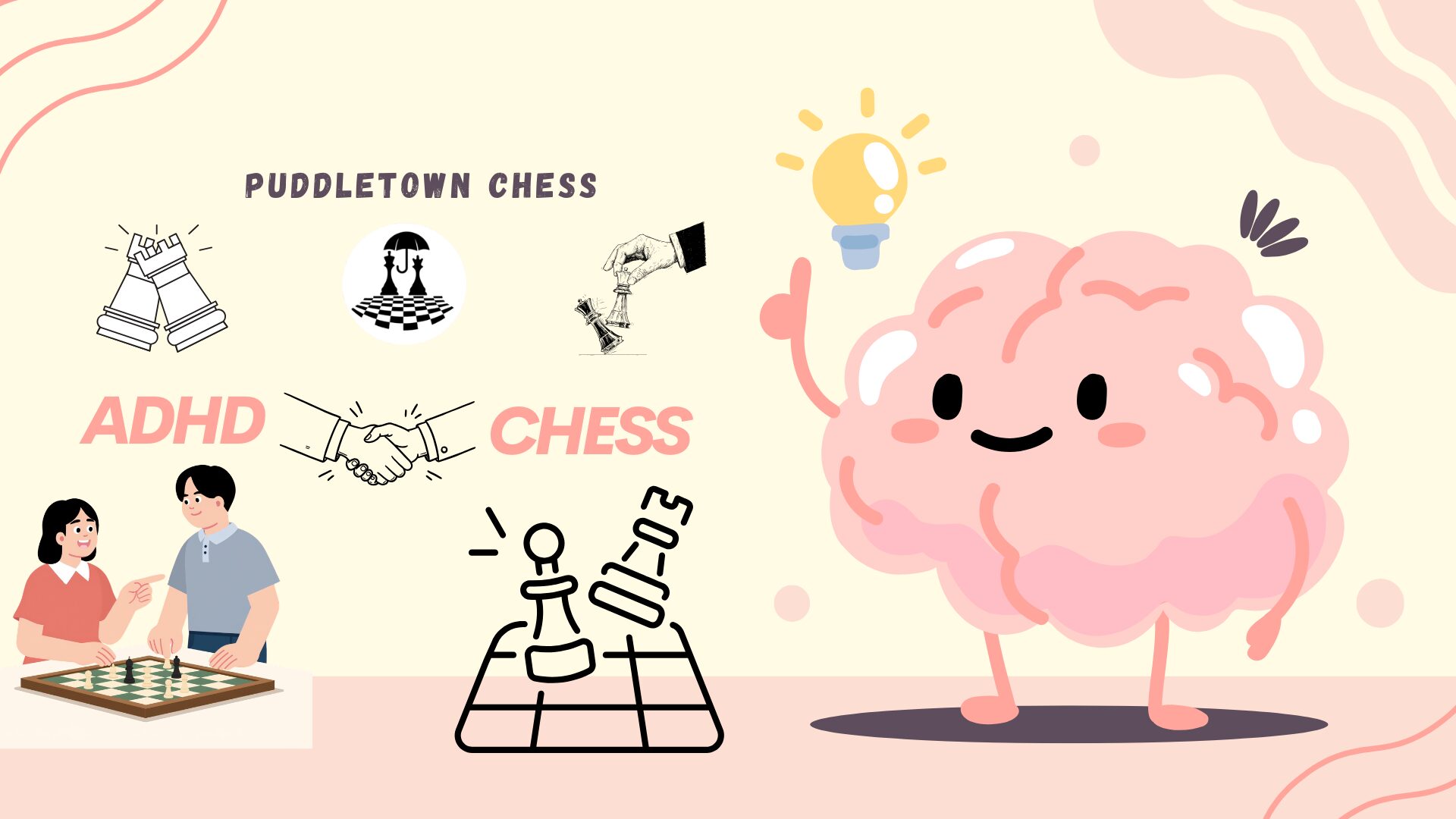

Many parents of children with ADHD spend years searching for activities that truly help their kids focus, build confidence, and enjoy learning.
Some activities feel overwhelming. Others don’t hold attention long enough.
But one activity consistently surprises families:
Chess.
At Puddletown Chess tournaments and training sessions, we’ve seen many kids with ADHD discover that the chessboard is a place where their minds actually thrive. The game naturally strengthens skills like focus, planning, and impulse control, even when the kids don’t even realize it.
Here are seven reasons chess works so well for kids with ADHD.
1. Chess Builds Focus in Short Bursts
Chess doesn’t require constant attention for long periods. Instead, it creates small cycles of focus:
Look at the board → calculate → make a move → watch the opponent respond.
These quick-thinking moments are perfect for ADHD learners, who often focus better in shorter bursts rather than long stretches.
Over time, these children are able to focus over longer periods through training.
2. Pattern Recognition Is Highly Engaging
Chess is full of patterns, forks, pins, checkmates, and tactical ideas.
Many kids with ADHD love recognizing these patterns. Once they start spotting them, the game becomes exciting and rewarding.
Each new discovery keeps them coming back for more.
3. Chess Encourages Creative Thinking
Kids with ADHD often think in creative and unconventional ways.
Chess rewards that creativity.
Players are free to experiment, try bold attacks, and explore different ideas. This freedom makes the game feel more like problem-solving than strict rule-following.
As a game with millions of possibilities, players never run out of fun!
4. Immediate Feedback Helps Learning
One of the most powerful aspects of chess is how quickly players see the results of their decisions.
If a piece is left undefended, it may disappear immediately. That quick feedback helps kids understand mistakes and adjust their thinking.
Over time, this strengthens impulse control and decision-making.
5. Small Wins Build Confidence
Chess provides clear progress.
Kids improve by:
- solving puzzles
- spotting tactics
- playing/finishing games
- increasing ratings
These small wins can be incredibly motivating for children who sometimes struggle with confidence in other areas of school.
6. The Game Has Structure Without Being Rigid
Chess has clear rules and a predictable board.
But within those rules, players have complete freedom.
This balance of structure and creativity works especially well for many ADHD learners.
7. Chess Teaches Resilience
Every chess player makes mistakes.
Blunders happen. Games are lost.
But chess encourages players to analyze what went wrong and try again.
Over time, kids learn an important lesson:
Mistakes are part of improvement.
Conclusion
Chess is a lot more than a game; it’s a powerful learning environment.
For many kids with ADHD, the chessboard becomes a place where they can:
- focus deeply
- think creatively
- build confidence
- learn from mistakes
And sometimes, those 64 squares become the start of a lifelong love of learning and passion.